Back to school tomorrow. I went out and got all my supplies today. Very curious to see what we’ll be using all those Ziploc storage bags for!
One class will be held at the Harold Washington Library and the other will be at Dominican proper in River Forest. Like most things these days, heading back to school snuck up on me. My parents were here this weekend and I found myself having several conversations about Thanksgiving plans. We discussed turducken, which contrary to popular belief, wasn’t invented by the supremely avuncular John Madden. Where did August go? Where did the summer go? It seems only natural that having a child would cause time to pass with even greater rapidity. How is Abby already 8 months old tomorrow?
Monday, August 28, 2006

Sunday, August 27, 2006
Mama
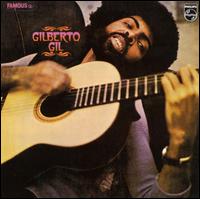 Gilberto Gil, Brazil’s current Minister of Culture, recorded his album 1971 that very year while living in exile in London. I’ve only given a couple close listens to the album (I wish I had more time for close listens. One of the things I’ve come to appreciate during commutes to and from River Forest for school are the opportunities they give me to closely listen to a couple albums) so I’m still connecting and familiarizing myself to the songs (his cover of Windwood’s Can’t Find My Way Home is nice standout) but I’m really enjoying the supremely relaxed feel of many of its cuts. The track, Mama, for example, is a gorgeously breezy ballad that, like the rest of the album, comes soaked in a warm bath of silky reverb and casually saunters barefoot under a late August moon while Gil strums his acoustic (accompanied by the subtle bass playing and backing vocals of Chris Bhttp://www.blogger.com/img/gl.link.gifonett) and laments Mama’s (Brazils?) desire to hold him too close to her apron strings. How else to read lines like, “I wanna kiss your face again/Am gonna go my way, mamma/ Don’t worry, don’t cry, don’t complain/Don’t try to hold me down”?
 I wish I knew more about the specifics of the anti-government hi-jinx Gil and Velosa were up to that originally got them thrown in jail and eventually led to their exile. What little I do know about the military’s rule of Brazil from 1964 to 1985 was that there were, at least in the late 60’s and early 70’s, many within the military, especially during the time of Brazil's enormous economic expansion, who believed they had to strongly curtail any cultural/populist sentiment that questioned their authority. This included torture, disappearing and indiscriminate arrests. I’m guessing that they saw in Gil and Velosa, already hugely popular Brazilian pop stars, a couple of cocky upstarts who were not so covertly looking to subvert the authoritarian rule they found themselves and their music living under.
You can listen to every single one of Gil’s albums here on his amazing website.
Monday, July 31, 2006
How Is It I Extract Strength From the Beef I Eat?
 I had forgotten how much I enjoyed Walt Whitman’s Song of Myself back when I first read it for a class I was taking in the mid-90’s. I’m currently reading Break, Blow, Burn: Camille Paglia Reads Forty-Three of the World’s Best Poems and it’s 17th. After each poem (Song of Myself, at 1,346 lines and 52 sections, is excerpted) Paglia offers clear and engaging insight into the poems meaning all but neutered of her patented Italian grade of high octane, exuberantly combative prose. There are no gems like “Women’s latent vampirism is not a social aberration but a development of her maternal function, for which nature has equipped her with tiresome thoroughness” or “In film, popular music, and commercials, we contemplate all the daemonic myths and sexual stereotypes of paganism that reform movements from Christianity to feminism have never been able to eradicate” as found in the archly playful introduction of her first book, Sexual Personae: Art and Decadence From Nefertiti to Emily Dickinson. In fact, there’s a refreshing pedagogic simplicity to her brief essays- they’re primers or refreshers (most of the 43 poems found here include numerous heavy hitters from the Western canon and, as such, have been anthologized out the wazoo) , introducing or reminding us of the poems merits. About Leaves of Grass she asserts that one of its central themes is “not war or moral struggle but expansion of consciousness. ‘I lean and loaf at my ease observing a spear of summer grass': like Wordsworth rejoicing in a field of wild daffodils, Whitman finds meaning in the random and commonplace.” And it’s in the poems many odes to the commonplace and its potential for consciousness raising that he gives us gems like this:
The boatmen and clam-diggers arose early and stop for me,
I tuck’d my trowser-ends in my boots and went and had a good
time;
You should have been with us that day around the chowder-kettle.
or this physiological question,
Who goes there? Hankering, gross, mystical, nude;
How is it I extract strength from the beef I eat?
or this orgasmic couplet
Something I cannot see puts upward libidinous prongs,
Seas of bright juice suffuse heaven.
The key words being “upward” and “juice.”
Photo taken from Walt Whitman Archive
Tuesday, July 18, 2006
American Movie: An American Folk Art

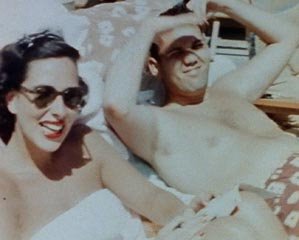 I’m just now beginning to edit together on iMovie some of the footage I took with our digital recorder last summer in Hilton (Yes, but does it have enough arch support?) Head. When my Mom turned 60 back in January of 2005 she had already made it known that what she wanted most was for all her children and their families to stay under one roof for a week on Hilton Head. My parents had owned a place there for over a decade, a cozy two floor condo with a late 70’s vibe and conveniently located across the street from the beach, before recently selling it and buying another, with a better view of the Atlantic, in the warmer climates of Tarpon Springs, Florida. Over those 10 years their condo in Hilton Head had served as the hub of numerous Breitenbach vacations, though the last time we had all been together, the last time we had all spent a week heading out to the beach or pool together for lazy afternoons and out to dinners in humidity swamped evenings was in the summer of 2002 when we all came together to celebrate my Dad’s own 60th.
So I filmed about 50 minutes of footage last summer- Cathy and I packing, my nieces and nephews playing in the pool, all of us singing Happy Birthday, a sunrise, sand castle building on the beach. I’m not too good at premeditating what I’m going to shoot or why, though I’d like to be. I’m still learning how to keep the camera near and how to reflexively take it up and begin filming. I’m learning about how cameras can steal the spirit of some and bring out the rascal in others. I’ve got a lot to learn. But mostly I’m still enthralled by how what ultimately is filmed, edited or not, can accumulate a kind of mythic resonance within families and become part of family folklore.
So, given that I’m prone to thinking about such things, I was especially excited to see that Joe had a link on his blog a couple months ago to Folkstreams.net, a site whose mission includes building a “national preserve of hard-to-find documentary films about American folk or roots cultures” and “to give them renewed life by streaming them on the internet.” And not just that! When browsing through their catalog of subjects, under the heading "Arts and Crafts Traditional" I found a link to the 19 minute documentary “Home Movie: An American Folk Art,” made in 1975 for a Smithsonian Institute festival. The filmmakers (Ernst Edward Star and Steven Zeitlin, then graduate students) had put out a call to the public to send them their home movies and photographs with the goal of then studying and editing them into Home Movie. According to the documentaries accompanying blurb, after sifting through all these family movies and photographs, Star and Zeitlin “began to see that, just as certain categories of stories recur from family to family, certain kinds of images recur in home movie archives. Scenes of holiday celebrations, birthdays, picnics, and vacations dominate these collections, and children, from infancy through high school graduation, at the mercy of their parents, are favorite subjects for the home photographer.”
The documentary itself is priceless. Not simply because the filmmakers interests helped to give my own inchoate fascinations with this subject some glimmers of coherence but because the documentary itself, now over 30 years old, has taken on and accumulated its own patina of funky nostalgia. Watching the documentaries first few minutes, where one of the filmmakers (Zeitlin, I’m guessing) appears sitting next to a projector dressed in what now radiates a kind of grad student geek chic and soulfully, earnestly pontificates (he seems to be reading directly from his thesis) about what lies at the heart of our need to record these moments, these holidays, birthdays and vacations, I was struck by how much it resembled a scene or an outtake from a Wes Anderson film. I thought, if Wes Anderson is one of the current masters of mining a very specific kind of Americana quirky, then this introduction was one of his templates. I also really liked what Zeitlin was saying. Speaking about what makes home movies a “unique folk art” he expounds that,
…where the art comes into it is in the act of selection. Why, for instance, did my parents film that particular scene? I figured out that I must have spent close to 150,000 hours at home before I went to college. How many of them could have been spent playing in the pool?
Clearly homes movies are not a random sample of our past but an idealization based on how we chose to preserve, remember and be remembered. From one perspective, home movies reflect the ideals of a particular family. For my parents, it was their home, their kids, their puppies, their little yellow pool with the 4 horses on it. It was what was distinctive and what was memorable about their own family that they sought to preserve on that sunny afternoon. I watched hundreds of home movies and saw hundreds of water sprinklers and planted pools. I began to realize that on another level, homes movies are an American tradition and as such they tell us something about American values and ideas. In that simple scene of youthful parents, happy children and a backyard swimming pool we catch a glimpse of an American dream.
What follows is a montage of scenes demonstrating this American dream—of children mostly-- children running through snow, jumping in leaves, playing on beaches, taking baths, newborns wrapped in swaddling, having birthday parties, enjoying Christmas morning, dancing-- all accompanied by a delicately mournful Eric Satie piece for piano. Theres a strong whiff of melancholy to it, these seemingly random moments that have been conferred a special kind of meaning simply because they were privileged with having been filmed. Soon our graduate friend Zeitlin returns to get all elysian and informs us that home movies are endowed with, in fact, a third and “universal level” of values depicted in home movies, the first two being the values “important to individual families” and “America as a whole. “ But what are these so-called universal values? Thankfully, Zeitlin throws it down for us:
By attempting to preserve that which is most beautiful to his life, the home movie maker might be seen as partaking in what seems to be a universal desire to create a golden age. From Shangri-La to Eden man has always needed visions of peace and harmony to guide him through the inevitable complexities of his present world. The home movie maker may be no more aware of the fact that he is filming a golden age then Adam and Eve were that they were living in paradise. But to an individual family, the world depicted in home movies might serve as their own golden age.
For the remainder of the documentary, Zeitlin and Star visit members of three of the families who had responded to their open call for footage and have them provide commentary as they watch their home movies together, a precursor to the director/actor commentary now found on so many DVDs. The filmmakers don’t ask too many questions that would support their thesis of home movies being conduits for a lost golden age, choosing instead to let the families randomly enthuse about how somebody always sits in the sun in just such a way, and how this or that uncle still has the same hairstyle 20 years later and how it hardly seems like a decade has passed since that wedding. birthday or graduation.
Now that simple editing software comes bundled with home computers, I’m interested in how many people are using these tools to construct narratives out of the more or less random footage they’ve taken. How do you create an additional layer of meaning or thematic structure to this footage and make it something more then a collection of disparate shots? How do you arrange it in such a way, edit it, so that it tells an engaging story? It's time for some new folklorists to step up and make a documentary about how children of the digital age and their parents have and will continue to create folk art by what they select to film and, more importantly, what and how they chose to edit.
My friend Julie told me yesterday afternoon that her daughters love to watch footage of themselves taken over the years. “It’s like a Disney movie for them,” she said, “you just put it on and their happy as can be.” And I find myself wondering how these movies and their repetitive viewings of them help (or hidner?) to shape memories and identities. How will they come to know themselves, their childhood, through these videos? How does video, as film critic Jonathan Romney once wrote, become a “prosthesis for human memory?” How rich and strange to think of the multitude of raw footage taken of their lives they’ll have to look back on when I compare it to my own archive of footage-- a fleeting 2 or so hours of super-8 my Dad filmed from roughly the late 60’s to the late 70’s. Footage, I might add, that languished for almost 20 years in various closets and attic crawl spaces before my Mom had them converted to DVD.
Ross McElwee, whose work I love, is probably the foremost purveyor of this personalized cinema verite I find myself so interested in. He’s certainly one of its most eloquent elucidators. A few years back when Cineaste interviewed him he had this to say:
McElwee: I think it’s going to be very interesting, by the way, to see what happens with this digital generation of parents who have recorded their kids’ every footstep. People were shooting a fair amount of super-8 film in the Sixties and Seventies. But it was expensive and difficult to load, and editing it was extremely time-consuming. Most people didn’t edit their footage; most footage was not viewed more than once. Digital video, or video in general enables parents to keep a constant record of a family as it grows up. So that very question you raised- “Am I remembering this correctly?”- needn’t be an issue. People can just go back to the data bank and see exactly how little Jimmy spooned his peas into his mouth at age four. There’ll be a record of it. And how strange is that?
How strange is that?
Saturday, July 01, 2006
Cheney In Undisclosed Location Growling
This paragraph from an article in yesternays NYT's concerning Thursday's 5-3 Supreme Court ruling on tribunals caught my eye:
In the courtroom on Thursday, the chief justice sat silently in his center chair as Justice Stevens, sitting to his immediate right as the senior associate justice, read from the majority opinion. It made for a striking tableau on the final day of the first term of the Roberts court: the young chief justice, observing his work of just a year earlier taken apart point by point by the tenacious 86-year old Justice Stevens, winner of the Bronze Star for his service as a Navy officer in World War II.
First, what a relief this ruling was. This was the last chance to reign in one of the more odious and inhumane elements of Cheney's runaway executive power grab and, thankfully, Kennedy swung with the more loveable bloc of justices because, obviously, you know where Roberts would have sat had he not recused himself because of his ruling in favor of the administration on the appellate panal last July. The above quote is one big old dollop of vicarious, well deserved comeuppance.
Second, Stevens is 86. He was born in 1920 (in Chicago) and if you're the praying kind I'd imagine you'd want to put in a request to the almighty, whoever that may be, to keep him blooming until there's a change in the political winds.
Thirdly, as if we didn't already know, Roberts and Alito will be joining Thomas and Scalia as card carrying members of the less lovable bloc of justices. Kennedy, more often then not, bears their stench and yet, partisan as this court is (and can we simply drop the pretense that the Supremes are or ever have been impartial arbiters of justice), his infrequent deviations may be the only favorable rulings we get for many years to come.
Lastly, yes, it really is 4:30 in the morning. Sleep training y'all. Sleep training, crying and adrenaline. Are there studies on this-- there's gotta be. That little peanut's cry affects me something fierce.
In the courtroom on Thursday, the chief justice sat silently in his center chair as Justice Stevens, sitting to his immediate right as the senior associate justice, read from the majority opinion. It made for a striking tableau on the final day of the first term of the Roberts court: the young chief justice, observing his work of just a year earlier taken apart point by point by the tenacious 86-year old Justice Stevens, winner of the Bronze Star for his service as a Navy officer in World War II.
First, what a relief this ruling was. This was the last chance to reign in one of the more odious and inhumane elements of Cheney's runaway executive power grab and, thankfully, Kennedy swung with the more loveable bloc of justices because, obviously, you know where Roberts would have sat had he not recused himself because of his ruling in favor of the administration on the appellate panal last July. The above quote is one big old dollop of vicarious, well deserved comeuppance.
Second, Stevens is 86. He was born in 1920 (in Chicago) and if you're the praying kind I'd imagine you'd want to put in a request to the almighty, whoever that may be, to keep him blooming until there's a change in the political winds.
Thirdly, as if we didn't already know, Roberts and Alito will be joining Thomas and Scalia as card carrying members of the less lovable bloc of justices. Kennedy, more often then not, bears their stench and yet, partisan as this court is (and can we simply drop the pretense that the Supremes are or ever have been impartial arbiters of justice), his infrequent deviations may be the only favorable rulings we get for many years to come.
Lastly, yes, it really is 4:30 in the morning. Sleep training y'all. Sleep training, crying and adrenaline. Are there studies on this-- there's gotta be. That little peanut's cry affects me something fierce.
Saturday, June 24, 2006
The Greatest Thing That Ever Came To Kansas
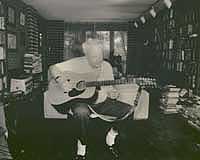 This poem by James Dickey destroyed me (still does) when I first read it 10 or so years ago. It details the awful falling of a stewardess who is accidentally sucked out the door of an airplane somewhere over the midwest. Dickey once said this about the stewardess in Falling:
"Falling" is a record of the way she feels as she falls; panic at first and then a kind of goddess-like invulnerability. She discovers that the human body can actually fly a little bit. She tries to find water to fall into, but in the end she can’t and falls into a cornfield and dies there. She undresses on the way down, because since she’s going to die she wants to die, as she says, "beyond explanation." She would rather be found naked in a cornfield than in an airline uniform. So she takes off everything, is clean, purely desirable, purely woman, and dies in that way. I also tried to think of the mystical possibility there might be for farmers in that vicinity, under those conditions.
It's rather long but worth your time, especially the poems end, which is perfect.
Sunday, June 11, 2006
Hello, I'm Adorable
 Just a little super cuteness before we head off to do a little reading. More later, especially concerning the showing of a new 35mm print of Victor Erice's The Spirit of the Beehive, one of the most beautiful and poetic depectitions of childhood I've ever seen. I watched a well-worn VHS copy of it a few years back when we were living in Berkeley, so an opportunity to see it on the big screen is really exciting. It's showing at the Music Box July 7-13th and I can't recommend it highly enough. If I have my way, all Chicagoites will be joining me to watch it.
London Summer

With all this peculiar late-September like weather we had this weekend I think this song needs to come to our rescue. It's from the wonderful compilation London Is The Place For Me 2: Calypso & Kwela, Highlife & Jazz From Young Black London and it captures some of those elements that exemplify summer-- the lilting quality of the gently looping bass that introduces the song, the soothing splashes of percussion and muted horn that nicely merge along with the balm of weaving vocal chants and a lovely daub of flute all conspire so that I can practically see that big old fat summer sun quietly slipping into a pair of swim trunks for a dip in the pool. Gorgeous. Thanks, Joe!
Yolanda: Ambrose Campbell
Update: Yousendit seems to have been having some problems with the original download link. They sent me a new link, so please let me know if you want to download this (you do!) but are still having problems.
Oh, and Happy Birthday to my Dad! Like Paul McCartney, he's turning 64.
Saturday, June 10, 2006
 Movies I Saw Numerous Times Over the Three Months My Parents Subscribed to Cable Television in the Early 80's
Ice Castles
Taps
Hawk the Slayer
The Incredible Shrinking Woman
Cannonball Run
Chomps
Any Which Way You Can
The Black Hole

Urban Cowboy
What am I forgetting?
 Socks, Be Gone With You!
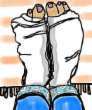
 There’s much I’d like to share with you (or at you) though I’m finding the miserable state of my sock collection to be the most pressing. This caught me completely off guard, as if, huddled together in the dispiriting corners of my sock drawer, they made a collective agreement to simultaneously go threadbare in the heels and hollow in the toes.
So I’ve gone about throwing them away. On any given day you can find a discarded pair in our trash atop banana peals, coffee grounds and various Abby related discharges. Initially I felt that odd maudlin regret you sometimes get when parting with articles of clothing (“Oh, I’ve had some mighty good times in those socks!) though this has quickly given way to a late spring-cleaning resolve to rid myself of as many cheerless socks as possible.
Filines Basement, here I come.
Wednesday, May 24, 2006
True 'Dat
From Kevin Drum:
CONGRESS WAKES UP....I'm a little late on this, but let me join the bandwagon of mockery directed at members of Congress who have finally decided that the executive branch has overstepped its congressional boundaries. After six years of signing statements, domestic surveillance, habeus corpus violations, torture of prisoners, and secret overseas prisons — all done with no oversight from Congress — what finally woke them up was a raid on a congressman's office. That can't be tolerated. Not for one second.
Well, maybe not. But at least the FBI got a search warrant signed by a judge. Congress should feel lucky they were treated with such sensitivity.
Could you imagine what dirt lies under all those Congressional rugs?
From Kevin Drum:
CONGRESS WAKES UP....I'm a little late on this, but let me join the bandwagon of mockery directed at members of Congress who have finally decided that the executive branch has overstepped its congressional boundaries. After six years of signing statements, domestic surveillance, habeus corpus violations, torture of prisoners, and secret overseas prisons — all done with no oversight from Congress — what finally woke them up was a raid on a congressman's office. That can't be tolerated. Not for one second.
Well, maybe not. But at least the FBI got a search warrant signed by a judge. Congress should feel lucky they were treated with such sensitivity.
Could you imagine what dirt lies under all those Congressional rugs?
Sunday, May 14, 2006
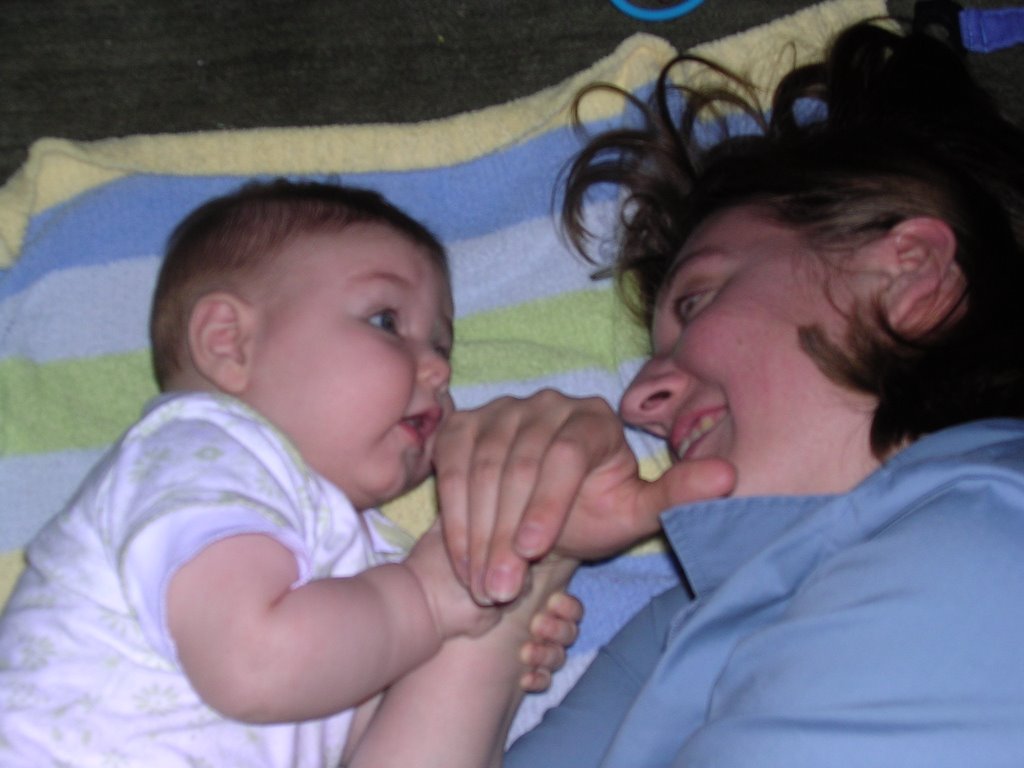 Now We Send Flowers
Back in the yonder halcyon days known as the mid-70’s (the Ford and Carter years for those of you using Presidents as the preeminent distinguishable feature on the time line) I bought my Mom cheap perfume for Mother’s Day. My best friend and I had each been given $5 to purchase gifts that declared our budding recognition for all our moms had done for us. But then we eyed a frisbee we both decided was very important to have. The perfume was $2.95 a bottle and smelled vaguely of Formica. With what money remained we were able to pull our resources together and purchase the frisbee for ourselves. This is how Moms sometimes continue to make sacrifices for their children without ever knowing it.
For many years this bottle of perfume remained wisely neglected in my parent’s medicine cabinet. Then it disappeared.
Happy Mother’s Day to my Mom and my baby’s Mama and to Mom’s everywhere who are unknowingly giving even when they’re receiving.
Wednesday, May 10, 2006
 The Eternal Feminine Is In Opie’s Hands
As the ads for Opie’s big screen adaptation of Dan Brown’s bewilderingly popular The Da Vinci Code become more conspicuous, I recently found myself feeling unmistakingly squirrelly (which is to say nuts) concerning my failure to read a book, no matter what its merits, over 30 million others already have. There’s an odd anxiety that comes with being unenlightened by something dominating the best-seller list for so long. Cathy, too, had read it back when we lived in Berkeley after a professor recommended it. “I couldn’t put it down,” he enthusiastically blurbed to her. So she bought the hardback at Cody’s for 30% off. And it seems like oodles of folks in my orbit have read it. Its ubiquity was/is disquieting. So I finally picked up our copy the other day and am currently half way through. It’s awful. Not such a surprise. But I’ll finish it because it asks so very little. (And seeing as how we are, as a country, decidedly estranged from books, especially books that ask for reflection, this may be the crux of its popularity.) I also keep wondering how Opie, competent Hollywood hack he is, will make it better. Well, for one, she’s in it. We’ll gladly pay $9 to watch Audrey on the big screen and sigh.


But really, what’s with this book? It’s all Chiclet chapters, warmed over Golden Bough (though all this talk of the sacred feminine makes me want to pull Camille Paglia’s swaggering Sexual Personae from the shelves and see how it holds up 16 years after it hypnotized me), hackneyed scenarios and gems of heelarious dialogue such as this:
(Note, if you haven’t read it, this excerpted scene joins our hero, the eminent Harvard symbologist Robert Langdon, as he dishes on Da Vinci’s Mona Lisa with a group of inmates as part of one of those ever popular prison outreach programs.)
“…Because Da Vinci was a big fan of feminine principles, he made Mona Lisa look more majestic from the left than the right.”
“I heard he was a fag,” said a small man with a goatee .
Langdon winced. “Historians don’t generally put it quite that way, but yes, Da Vinci was a homosexual.”
“Is that why he was into that whole feminine thing?”
“Actually, Da Vinci was in tune with the balance between male and female. He believed that a human soul could not be enlightened unless it had both male and female elements.”
“You mean chicks with dicks?” someone called.”
Ha Ha! Whoa, Daddy! Here’s hoping Opie had the good sense to keep the script churning with dick jokes aplenty! In the very least, we’ll have that. I’ve heard that in the film this scene ends with Langdon, played by Tom Hanks, and the inmates kicking back with some spud juice and tossing the old salad. Just squeaked by with that PG-13.
I’ll let you know when I’m done.
Friday, May 05, 2006
 Surprise Kiss On Demand
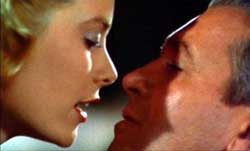
 Watched way too much tv yesterday. It’s all this on-demand magic I’m finding on my in-law’s cable. Since they subscribe to HBO I can dip into big taster displays of the on-demand content the network makes available for those occasional afternoons Abby and I come to the Heritage (I love that name, so regal and old world refined) and she takes 2 hour naps on my lap. Most of the movies HBO offers aren’t ones I’d want to spend any more time with let alone watch a first time (She-Devil, anyone?) though I did watch Vacation again a couple weeks ago and found myself almost waking the peanut up numerous times with ripples of suppressed laughter. (When Clark falls asleep on the road…the camera pans from the Griswald kids asleep in the backseat to mom snoozing in the passenger and then pauses just ever so slightly before panning over to Clark with this head thrown back over the seat happily snoring away. This is sitcom goofy, but Ramis was slaying with this stuff back in the late 70's and early 80's.) And watching Rear Window again early last month came with the revelation of Grace Kelly and Jimmy Stewart’s first kiss, one which happens unexpectedly--in Hitchcock’s celebrated interviews with Francois Truffaut he called it a “surprise kiss.” The first time we see Kelly’s face it practically blooms onto the screen while moving languorously in slow motion downward to Stewarts awaiting lips. She’s like some enchanted current drifting onto the screen and offering the surprise of something unexpectedly sensual.
Yesterday I watched the first 6 episodes of HBO’s Entourage and really enjoyed it. It’s got a sweet harmless center surrounded by a white noise of fatuous dick jokes, rabid pussy philosophizing and copious smoking of the herb. Jeremy Piven’s rapacious agent, Ari, is the scene stealer so far, but I also have a soft spot for Kevin Dillon’s sweetly dumb and desperate Johnny “Drama.”
Wednesday, May 03, 2006
 Listening To Arthur Lee Records
As if I didn’t already want to carry Tracyanne Campbell’s books home from school, she’s gone and named the lead single from the upcoming Camera Obscura album, Lloyd, I’m Ready To Be Heartbroken. This, of course, a perfectly coquettish homage to Lloyd Cole and the Commotions’ Are You Ready To Be Heartbroken, only one of my most favorite songs ever from the still utterly awesome Rattlesnakes album. An album that's all of 22 years old at that! Sheesh! You can hear the Camera Obscura song here. If this is any indication, Camera Obscura just keep getting better and better. Gives me that old teenage feeling.
Friday, April 21, 2006
 Disco Delicious
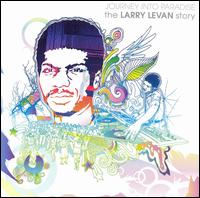
This really is a terrific compilation of creamy and delicious disco goodness. Even great to hear Situation again from that cassette bargain-bin classic, Upstairs at Erics. And other then Once In A Lifetime it's all sparkling new to me. Springtime is Larry Levan time.
Tuesday, April 18, 2006
 Wildfire Virus
According to this article in the Tribune, Chicago has recently been experiencing an outbreak of the Norovirus. According to the spokeswoman for the Cook County Department of Public Health, “[I]t's really such an easy virus to spread. It really takes off like wildfire.” That’s for sure.
It’s been way too long since I offered up such a hearty abundance of foodstuffs to the porcelain god and I liked it that way. Vomiting—its nauseating encroachment, attempts to avoid and the final elemental heaving—well, it’s fucking awful, isn’t it? The spadmodic inefficiency of it all. 11:00 pm. 2:00 am. 4:30 am. The primal contractions and acid tinged expulsions. And when the Norovirus is done with the stomach it sets to work on the intestines. I’ll spare you those details.
When Cathy called our pediatrician to find out what this meant for Abby (if you’re showing symptoms, stay away, otherwise wash hands thoroughly before handling the wiggliest and cutest baby in the world), the nurse who answered said that half of all calls coming in that day were regarding “stomach flu.” Folks at Cathy’s office were absent because of it. It visited me for a few days. But I’m much better now.
Saturday, April 15, 2006
 Out On The Wiley, Windy Moors
 One of last years most welcome and pleasant surprises was Kate Bush’s lovely and heartfelt Aerial album. Over the last 20 years Bush’s music has managed to carve out a very specific and cherished niche in my music listening universe. Albums like The Kick Inside,The Dreaming, Hounds of Love, the best-of The Whole Story and The Sensual World all managed to swooningly fill that niche. I think one of the most endearing and enduring qualities about these albums is their fierce romanticism, the murmuring undercurrent of something vaguely misty and mythological-- a fairytale whiff of unicorns, witches and rainbows. All is forgiven when you hear what she's done with this. Kate Bush was and continues to be the coolest lady at your local Renaissance Faire-- she knows a little about the black arts and she plays a mean harpsichord. And she won't be handing out Elephant Ears, golden and delightfully doughy though they may be.
When her debut album, The Kick Inside, was released in 1978 she was just a wee 17 years old. Its first single, Wuthering Heights, was a big hit on the International charts, another way of saying it didn’t make much of splash in the U.S. Still, the Germans and various other European countries were hungry for expressive dance in soft focus, so Kate made a video for it.
Now, I honestly adore the video. Really, you should too. Did you check it out? You honestly should. You don’t have to watch it all, just try to make it through first minute to the chorus when things call for a few cartwheels. There’s a Talent Show histrionics about it that I find incredibly charming. There’s also a sweetness and light in witnessing a dreamy teenager bursting onto the scene with a song as odd and rich as Wuthering Heights. It moves her this way.
Wednesday, April 12, 2006
 My Own Private Hanami
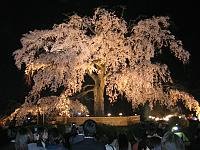
This article from last week’s Economist caught my eye. I really liked this:
When the saura (cherry blossoms) bloom, Japanese people sit in parks getting raucously sloshed and contemplating the transience of life, as symbolized by those briefly spectacular flowers. Everybody agrees that alcohol heightens the experience.
It’s 75 degrees out. I have the windows open in the living room for the first time this year and dappled sunlight is giving everything a becalming golden luminescence. Since grandma has Abby for the day the incredible Remikks Potpourri is enjoying some highly audible time (“a little bit of drums, a little bit of bass!”) on the stereo. And I’m drinking a Sierra Nevada Pale Ale, “alcohol 5.6% by volume.” Everybody in Japan agrees it heightens the experience. I’ll probably have another.
Saturday, April 01, 2006
 Viva Sweet Spring
 Abby is a constant. She’s there in the woozy minutes before dawn, nestled in the cradle of my arms while my head is still thick and confused with sleep. We shuffle down the hall and up the stairs and are comforted by the first outlines of blue creeping through the blinds. She’s smiling up at me. I stop to look down at her and she’s looking right back, her eyes wide and stunned with prospects.
She talks to the fan. What must it be like, to have spent nine months, as our pediatrician told us, “in a liquid environment,” where all your insatiable nascent needs were met and encompassed by the fine tuning of one of evolutions most exquisitely calibrated vessels, only to arrive into a world where you’re suddenly dependent on two people of good intentions who are unable, however much they fumble and attempt, to fully understand the outburst of your newfound desires? Only the fan knows. We walk into each room and turn them on their lowest settings, the better to make out the contours of their solacing blades and becalming revolve. Afternoons we’ve lounged on our backs side by side watching them turn while we waved our arms in delight at their rotary charms. I don’t pretend to be learning some secret lesson from the innocence of her untainted infant wisdom—the fan is as dumb an inanimate object as our lamps and toaster, but I am prepared to indulge her for the joy it offers, the solace it provides…all the laughter it sends rippling from her and washing over me.
There are many cries. They vary in duration, intensity, emotional affect and histrionics. They roughly translate as, “I’m hungry,” “I’m tired,” “I’m bored,” “I’m sitting in a deluge of my own uncontrollable making and it truly sucks,” “I’m overwhelmed,” “I’m frightened and so very sad to find that I just woke up in my car seat alone in this dank room and I’m terribly sad—why, oh why did you see fit to abandon me this way like some unoffending gypsy cast asunder and destitute?” While each elicits a pacifying response on our part, it’s that last cry that gets me the most. It’s how when I open the door and allow the hallway light to slant in and brush aside the shadows and crouch down to where my face hovers just a few inches from her own and I see the fullest manifestation of a doleful expression I’ve ever witnessed. It’s how it reverberates and tugs and sends precision pangs tumbling through me. It’s how I pick her up and she curls into me with her legs tucked up and her head warm and pressed against my neck.
A while back I wrote about how having a baby was one of life’s great quotidian events, simultaneously mundane and irresistibly astonishing. We recognize that our own aura of astonishment naturally advances as far as the grandparents, the grandmas in particular, who share and cheer along with the minutia of our excited reports on the latest Abby astonishments. There’s also an abundance of mundane here too. It took us a while to admit that it’s okay for parenthood to occasionally have fits of dullness. There are the doldrums, for example, of Abby asleep in my lap while I sit unable to stir myself to read another line of whatever book or magazine lies before me and a fog settles along my brain. This is when we praise the genius of the iPod shuffle setting. These waves of the mundane are minor struggles and tundra soon gives way to blossom.
Abby has been with us for a little more then three months. Born fast, furious and spindly while most everybody else slept that early December morning, I remember how I first walked over to where the pediatrician and nurse were tending to her with my hands held tentatively behind my back. I remember she was awake, as most newborns are for the first couple of hours, her face turned away from me, and how when I spoke to her she turned her head, her eyes blinking against the heat lamps, and looked right at me. I remember how much I hoped she recognized my voice from all the nights and mornings I had talked to her. "Hello, my little girl," I told her, "I'm so happy to see you. I'm so glad you're finally here."
Subscribe to:
Posts (Atom)