Saturday, October 06, 2007

A Museum Of Apples

If the apples haven't already been baked in this freakishly tropical October heatwave Chicago's presently wilting under, we're hoping to round up a few of the 20 different varieties of apples Kuipers Family Farm's grows tomorrow morning. But reading Michael Pollan's The Botany of Desire has me aspiring to one day make it over to Geneva, New York. It's here, as Pollan writes,

...on the banks of Seneca Lake, in excellent apple-growing country, a government outfit called the Plant Genetic Resource Unit maintains the world's largest collection of apple trees. Some 2,500 different varieties have been gathered from all over the world and set out here in pairs, as if on an a beached botanical ark. The card catalog of this fifty-acre tree archive runs the pomological gamut from Adam's Pearmain, an antique English apple, to the German Zucalmagio. In between a browser will find almost every variety discovered in America since Roxbury Russet distinguished itself in a cider orchard outside Boston in 1645.

A museum of apples. Imagine the apple pies you could make! The apple fritters!

Wednesday, October 03, 2007

Would You Like to GPS the Location Of This Book?

The great library crisis of the 21st century is one of relevance. Hands are wrung, shoulders are shrugged and ideas are sprung in hopes of offering patrons the tools necessary to fulfill their various information needs. Tools, one might add, many patrons are already using in their daily lives and have come to expect of their libraries and other public institutions.

And so we behold Maricopa's Dewey eviction. Out with the outmoded and in with the new? The fascinating flurry of comments found at the end of Karen Schneiders Techsource post regarding Maricopa are well worth reading--exhibiting passions about this issue that I find hard to muster. At best, I'm agnostic. At worst, indifferent. I understand and respect the history and merits of Dewey but I'm not entirely convinced of its irrevocability. If Maricopa's patrons were discouraged by Dewey and hankering for a new, friendlier classification system that encouraged and facilitated browsing--then by all means--if BISAC supports that need, fantastic. It certainly seems to, though I was especially encouraged by Maricopa's readiness to revert back to Dewey if their experiment failed.

Certainly there are some questions that need to be explored. Would this work for larger libraries? What about those patrons or reference staff who don't want to browse and want to find a specific book? Could Dewey be kept if the natural language signage was improved or expanded?

Ideally, in the end, my hope is that with all the telecom convergence activity currently underway, I'll soon be able to use my phone to access a library's catalog in addition to taking advantage of the catalogs GPS application which will conveniently lead me directly to the book I'm looking for.

Monday, October 01, 2007

In the Library


In the Library

for Octavio

There's a book called
A Dictionary of Angels.
No one had opened it in fifty years,
I know, because when I did,
The covers creaked, the pages
Crumbled. There I discovered

The angles were once plentiful
As species of flies.
The sky at dusk
Used to be filled with them.
You had to wave both arms
Just to keep them away.

Now the sun is shining
Through the tall windows.
The library is a quiet place.
Angels and gods huddled
In dark unopened books.
The great secret lies
On some shelf Miss Jones
Passes every day on her rounds.

She's very tall, so she keeps
Her head tipped as if listening.
The books are whispering.
I hear nothing, but she does.

-Charles Simic

Who says librarians don't have special powers? I wonder if one of the singular strands that runs through all librarians, both present and future, is the quiet joy we've experienced drifting up and down those aisles of whispering books.

Sunday, September 30, 2007

Autumn

We headed out to the Chicago Botanic Garden this morning for a picnic. A perfect autumn day, too- an embracing warmth with a dry soughing wind and a powder blue sky lazy with clouds. Can we squirrel some of this away and dig it up sometime in mid-February?

Picnics at the garden, it turns out, are frowned upon. The sight of people gorging themselves on cheese and crackers might, I suppose, upset the laboriously manicured balance of all that is, well, botanic. I wondered, upon seeing some lily pads, if they weren't tended each morning by groundskeepers who neatly tethered them to the silty bottom of the pond. Undeniably pretty, it brought out the ageist impulse in us. "This is probably really nice for grandmas," we thought.


Still, it left me feeling expansive and with an itch for my own garden. Last weekend Abby, Cathy and our 2-year old friend and upstairs neighbor Emma invested in some crocus bulbs. Planted by small hands on a late summer day in September they offer the promise of winters end come late March. Fluorescent purples and yellows making a mockery of a Midwestern settlement of gray. I'm already looking forward to their arrival.

Sunday, September 23, 2007

Personal Anthropology: Electronic Mail


Back in the heady days of the early 90's I could be found amongst the undergraduate sprawl of the Ohio State University in Columbus, Ohio. Like most financially strapped undergrads, costly long-distance phone calls were rarely an option. I wrote letters to my family and friends using nothing but a pen and college ruled notebooks courtesy of Mead. A week or so later I'd receive their reply. How quaint! Virtual communication options were, however, quietly establishing their presence in dull, red-bricked campus buildings where--as my then Northwestern-tethered friend Joe repeatedly, excitedly insisted--I could sign up for an "electronic mail" account.

An entry from a diary I kept then. April 12, 1991--Friday:

Ate lunch and headed over to Baker Systems and finally got an Electronic Mail account--something Joe has been telling me to get for almost a year--so it'll be in effect by this Thursday--cool! I can't wait. I'll be able to send mail directly to Joe and Will at Northwestern-- I can even talk directly to them...

That following Thursday, May 2, I stumbled through my first e-mail. A few weeks later I had managed to join various newsgroups and mailing lists, most devoted to the various niches of the then burgeoning electronic music scene ricocheting about Europe--the sounds and news of which, much to my discontent, were wading far too slowly across the Atlantic.

In their article, Netizens: On the History and Impact of USENET and the Internet, Michael Hauben and Ronday Hauben nicely summarize the giddy potential such aggregation of niche content suddenly, almost magically, made possible:

Inherent in most mass media is central control of content. Many people are influenced by the decisions of a few. Television programming, for example, is controlled by a small group of people compared to the size of the audience. The audience has very little choice over what is emphasized by most mass media. Usenet, however, is controlled by its audience. Usenet should be seen as a promising successor to other people's presses, such as broadsides at the time of the American Revolution and the penny presses in England at the turn of the nineteenth century. Most of the material written to Usenet is contributed by the same people who actively read Usenet. Thus, the audience of Usenet decides the content and subject matter to be thought about, presented, and debated. The ideas that exist on Usenet come from the mass of people who participate in it. In this way, Usenet is an uncensored forum for debate where many sides of an issue come into view. Instead of being force-fed by an uncontrollable source of information, the participants set the tone and emphasis on Usenet. People control what happens on Usenet. In this rare situation, issues and concerns that are of interest, and thus important to the participants, are brought up. In the tradition of amateur radio and Citizen's Band radio, Usenet is the product of the users' ideas and will. Amateur radio and CB, however, are more restricted than Usenet. The range of Usenet connectivity is international and quickly expanding into every nook and cranny around the world. This explosive expansion allows growing communication among people around the world.

Suddenly the trickle of content I had been piecing together from various mass media resources became an all-you-can-eat buffet covering various facets of the scene. Album reviews, heated discussions concerning the definition of "ambient music," and a multitude of other "issues and concerns" of interest were available for perusing and expanding.

So, more then a positive experience, it was a small epiphany--the discovery of a formally non-existent community of fellow electronic music travelers huddled and hunched over their far-flung computer keyboards all excitedly (and eloquently) sharing their passions.

Wednesday, September 12, 2007

LIS768


This blog has been on summer-induced hibernation. School, however, is coaxing me from my slumber in the form of LIS768, one of the last classes I'll be taking through Dominican's Graduate School of Library and Information Science. I'll be digging around and writing about various curiosities regarding this fascinating, albeit sprawling and amorphous world of Library 2.0.

For those of you in LIS768--I'm primarily interested in audiovisual services and programming in public libraries, an area that, for a variety of reasons, receives scant academic or professional consideration. I hope to soon post a series of interviews I conducted and filmed this June with some wonderful local audiovisual librarians sometime in the next couple weeks.

I've long wondered how audiovisual departments could, in addition to providing materials to their patrons, assist them with creating content. Pre and post-post production software for creating and editing film or music is cheaply and readily available. Why aren't libraries working with teens, for example, to facilitate and create dynamic YouTube documentaries about their communities?

Perhaps what I find most exciting about the Library 2.0 movement (campaign? lobby? agitators?) is that it embraces this idea of patrons as content creators, whether it be adding comments on a blog or creating podcasts. I look forward to exploring that, among other curiosities, more in-depth over the course of this class.

Thursday, August 02, 2007

Deep Down The Slide

Over the last few days Abby has requested "Little" Louie Vega's sublime 1993 House single, Deep Inside. numerous times. Indeed, it's become her tiny yellow slide anthem as she's cleverly altered the "Deep, deep inside...Deep, deep down inside" Barbara Tucker sample that runs throughout the track to "Deep, deep down the slide...Deep, deep down the slide!" Maximum adorability set to a 4/4 beat.

House your body to the bass, little girl!

Monday, July 09, 2007

Waiting For The 22

"How ya doin?"

Instinct, habit, without thinking though the warning bell had already been sounding from the moment I first noticed him approaching, the barely conscious registering of his queasy body language.

"Fine," I said.

He sat down next to me, on the hot black bench where I was waiting for the bus. He held a package of cigarettes in his hand, trying repeatedly to fish one out. Tapping repeatedly on his wrist. Needless repetition. He was thin, feverish and untethered. Completely off. Schizophrenic. A tyrannizer of the normal.

"Are you a good sport or a spoiled sport?"

Is there an answer? Best to look away. I'm not really here. I have a hard enough time engaging with the self-possessed. But empathy kicks in. I want, and I'm probably thinking this later, as the bus is pulling away and I'm looking at him still sitting on the bench, still talking to the me that is no longer there, to bring him back, as though he surely left it at some point, to sanity. A wave of my hand, a lift of the curse, a bestower of miracles. "Return to yourself," I'd say with a sorcerer's flourish and there he'd be, intact, bewildered by his new clarity...apologetic and a little embarrassed. "No worries," I'd say. Instead there's this.

"It's like....it's like your watch. Like the glass on your watch and when you walk you can smash right into it. Like the glass inside you."

At which point the bus arrives, curing me of my agitation, of my delusions, of the rubbing up against madness. It's only a few seconds, this absurd interaction. But it's part of the lingering accumulation of mental health disasters, of humanity still breathing but gone to husk, that nag and haunt me and our entire approach to mental health in the U.S. So I'm left with clumsy empathy wanting to offer a line, to pull him back, to bring him within proximity of right where I am now, where reason is, for now, firmly tethered, and where my agency meshes with those I love and is met, a million times, by their reassurance--their reinforcement.

Saturday, July 07, 2007

Riverwalk

Check it out! The missus might tell you she flew a little by the seat of her pants to get this one off the ground, but I doubt she was ever without the reigns held firmly in hand, offering an occasional kick in the ass when necessary.

Show the Riverwalk some love the next time you're downtown this summer.

Wednesday, July 04, 2007

Roman Candle Lightning Lights Up the Sky

"We hold these truths to be self-evident, that all men are crated equal, that they are endowed by their Creator with certain unalienable Rights, that among these are Life, Liberty and pursuit of Happiness."

Those simple words are our starting point as Americans; they describe not only the foundation of our government but the substance of our common creed. Not every American may be able to recite them; few, if asked, could trace the genesis of the Declaration of Independence to its roots in eighteenth-century liberal and republican thought. But the essential idea behind the Declaration-- that we are born into this world free, all of us; that each of us arrives with a bundle of rights that can't be taken away by any person or any state without just cause; that through our own agency we can, and must, make our lives what we will-- is one that every American understands. It orients us, sets our course, each and every day.

Indeed, the value of individual freedom is so deeply ingrained in us that we tend to take it for granted. It is easy to forget that at the time of our nation's founding this idea was entirely radical in its implications, as radical as Martin Luther's posting on the church door. It is an idea that some portion of the world rejects- and for which an even larger portion of humanity finds scant evidence in their daily lives

-
Barack Obama, from The Audacity of Hope

Monday, June 18, 2007

Early Bird, Before the Worm

Sometimes Abby gets up awfully early. Like 3:45 am early. That's what she gave me for Father's Day. I was able to get her to go back to sleep, but that usually means 15 minutes to a half hour if we're lucky. But at 4:15 I brought her into bed and she slept on my chest for another hour. I never fell back asleep, though I didn't want to anyway. I listened to her breathing, heard the first birds begin their chatter and felt overwhelmed. With gratitude, with joy, with wanting to hold on to the moment. "You're my kid," I kept thinking. "You're who makes me a Dad." I'm damn lucky.

Enough sap to make up for the maple shortage.

Friday, June 08, 2007

DVDs and (the Woeful Lack of) Accompanying Texts

In his latest Global Discoveries on DVD column for Cinema Scope magazine, Jonathan Rosenbaum discuses why he's never rented a DVD-- namely that they lack the accompanying booklets or special features that come with so many reissues. Criterion DVDs, for example, often includes lavish brochures or booklets with scholarly essays, photographs and other enlightening materials. And with box sets, as Rosenbaum points out, "the differences become more pronounced," with the sets including "larger booklets and even book in some of these packages."

Of course, for those of us who aren't film critics for a living but have insatiable appetites for film, to say nothing of salaries that don't exactly encourage the rampant buying of all that we'd like to see, renting DVDs is usually our only option. But what a bummer to not have those accompanying texts.

One of the many things I adore most about film, especially those works that challenge me, is to read what others, especially those with more time, resources and insight than myself, have to say about it. After watching Michael Haneke's masterful and devastating debut film, The Seventh Continent, a few weeks back, for example, I was lucky enough to find a couple highly astute essays that greatly enhanced my own muddled understanding of the film. It's one of the great joys in my life, and clearly I'm easily gladdened-- to luxuriate in a piece of film criticism that manages to direct all my inchoate thoughts (of which there are many) about what I just saw, that takes the raw emotional charge of the film as it's still reverberating through me, and begins to give it structure or, with the best criticism, adds depth and texture to my nascent understanding of the film. So obviously I miss those accompanying texts that Netflix removes (where do they go...in the trash?) in order to keep its overhead costs in check. But I'd be willing to pay a couple extra bucks a month to have them make quality scans of this material and make it accessible to members through their website.

Tuesday, June 05, 2007

Let Me Bind Your Governement Accountability Document

When I worked at the Northwestern Law Library one of my more pleasurable responsibilities was binding the latest Government Accountability Office reports that arrived as part of the Federal Depository Library Program. In a nutshell, the GAO is a nonpartisan "investigative arm of Congress" that "studies how the federal government spends taxpayer dollars." The reports are concise, well written and fascinating. For a policy wonk dabbler like myself, the relative brevity of the reports coupled with the fascinating range of issues they cover makes for worthwhile reading.

For my Internet Fundamentals class I read a May 2006 (GAO-06-426) report on broadband infrastructure and access in the U.S. Rural areas, for a variety of reasons, don't have nearly the broadband infrastructure that urban and suburban areas enjoy. But not because they'd rather be growing ethanol corn than surfing the Web. The biggest reason, unsurprisingly, is that providers of broadband don't think they'll make a profit. The three main reasons the broadband providers give for not deploying infrastructure in rural areas is population density (namely, the lack of it), terrain (mountains, lots of trees) and something known as backhaul. And the Amish.

Other recent GAO reports that I wish I had more time to peruse include electronic voting challenges, FEMA and The Department of Homeland Security's continued waste, abuse and fraud in regards to their ongoing response to Hurricane Katrina, and a look at the $420 million the U.S. provided to entities in the West Bank and Gaza over the course of 2005 and 2006 in hopes of reforming the Palestine Authority and supporting the piddling Middle East peace process.


Friday, June 01, 2007

Lefty Wholesomeness

There's a great cast in The Family Stone (not to be confused with Sly and his own Family Stone), one of those films that came and went over the holiday season of 2005 and will no doubt go on to find a snug place on December back-channel television lineups, sandwiched between Jingle All the Way, Love Actually and The Santa Clause 3. I caught it yesterday afternoon over the course of a couple Abby naps courtesy of HBO's On Demand movie fare.

The great cast is headed up by Diane Keaton and Craig T. Nelson who play the loving parents of the Stone family. But the great cast are slathered over 103 minutes of warmed over Hollywood liberalism and equally soft-hearted sentiment dolled out with an almost admirable sense of guilelessness.

There's a scene around the dinner table on Christmas Eve that plays like CNN's Crossfire as Keaton, playing the matriarch Stone, protects her beatific deaf and gay son (but no incurable disease for him!-- that honor goes to Keaton, who's cancer has returned thus allowing for a long parade of tears, hugs and gently falling snow) from the slings and arrows of Sarah Jessica Parker's Meredith Morton, an anxious, materialistic, illiberal type who may actually marry Mr. and Mrs. Stone's first son, played by a zombie-like Dermot Mulroney.

Parker's Morton repeatedly sticks her foot in her mouth, the end of which has her character awkwardly declaring that no reasonable parent would ever wish their child to be gay, life being difficult enough as it is. This is too much, of course. Such a dazzling check list of conservative homophobia is met with righteous indignation. And it isn't so much that I disagree with this indignation, a proper response to the strong currents of homosexual intolerance that run through so much of America, so much as the whole scene, like much of the movie as a whole, feigns innocence while serving us a primer in lefty wholesomeness every bit as white bread and stilted as Sam Brownback dancing to YMCA at a wedding.

Wednesday, May 30, 2007

A Spectacular Din of Tymbals

I stepped out of the car this morning in River Forest and was greeted by this awesome sound. Cicadas were everywhere. First I noted the thousands of former slumbering holes next to the bushes where I parked. Then I saw them on the bushes, curled and clinging. Some torpidly flew through the warm air while others, less fortunate, lay squashed on the sidewalk.

At lunch I sat outside to enjoy their collective sound which is like a police siren without any edges, one sustained note ripe with urgency. According to the Smithsonian National Museum of Natural History (where the above sound sample was found):

The sound is made with structures known as tymbals which are located on the sides of the first abdominal segment, near the top just behind where the hindwings attach. Large muscles contract, causing the tymbal surface to bend inwards which produces a vibrating click. These vibrating clicking noises are enhanced by a large air chamber that extends well into the abdomen. Repeated contractions by thousands of cicadas can create a spectacular din.

After lunch I returned to the library where I sat to a curiously hearty crunch. One of the critters journeyed in on my posterior and had met its demise.

Saturday, May 26, 2007

Audiovisual and Public Libraries

While I wasn't expecting to find books with encouraging titles like Audiovisual Bonanza: A History of the Public Library's Alternative Media Niche or, even better, Audiovisual Departments, Public Libraries and the 21st Century (though I certainly would love to find books like that, especially if they included a comprehensive annotated bibliography), I am a little surprised by the utter paucity of titles available expressively concentrated on audiovisual materials in public libraries. Of course, it's now dawning on me that my search criteria has been entirely wrong...and that what I really need to be searching under is "Nonprint Media Services" or something similar.

In any case, I created my own independent study course through the GSLIS program I'm currently wading through at Dominican University in hopes of immersing myself in the history of and possible futures for audiovisual materials/departments in public libraries. While Dominican offers a healthy smattering of courses covering librarian fundamentals, its course catalog ventures little further. No course I've taken, no book or article assigned, has discussed or even mentioned, however fleetingly, matters pertaining to the audiovisual. Nor, for that matter, do many GSLIS schools. I spent a few hours roughly a month ago hungrily browsing through the ALA's list of Accredited Master's Programs in Library and Information Studies in hopes of finding a professor I could contact or a syllabus I could use as a template. In the end, I came across only one course that bluntly offered what I was looking for. The GSLIS program at the University of Illinois at Urbana-Champaign offered a class titled, simply enough, Audio Visual Services In Libraries which was, I'm sad to say, discovered in their Historical Course Catalog, which "includes courses no longer taught as well as all courses numbered under the system used through summer 2004." That dog don't hunt. The description for this now defunct class read:

Designed to acquaint students with the nonprint media responsibilities of libraries; includes the evaluation, selection, and acquisition of software and hardware, the utilization of media in various types of libraries (by individuals and groups, in formal and informal programs), and the administration of integrated media collections (films, recorded sound, video, and exhibits).

Nothing too sexy, but what I wouldn't give to have seen the reading list!

My own initial questions regarding audiovisual services in public libraries, as flimsy as they may be, are asked in hopes of finding a more promising path and ultimately gleaning something far more substantial:

-What's the history of audiovisual materials in public libraries?

-What public libraries are known for having great audiovisual departments/collections? What makes them great? How did they that way?

There are other questions, equally inadequate, but it's a start nonetheless.

Monday, May 21, 2007

Overcooked Suburban Malaise

Roughly the first 45 minutes of Little Children, Todd Field's film adaptation of Tom Perrotta's novel of the same name, is wonderful. Field has a real flair for capturing and depicting the languidly enchanted quality of suburbs in the summertime. His sound design work is also finely crafted, frequently taking diegetic sources and subtly manipulating them to reinforce the narrative. And one of Little Children's strokes of genius is having Will Lyman of PBS's Frontline provide voice over narration, his rich authoritative voice giving a surreal gravity to the characters inner lives. What starts with so much promise, however, ends in a heap of overwrought, hackneyed silliness.

One of the films conceits is that Kate Winslet's character,
Sarah, is a plain Jane type, maybe even a little homely. The filmmakers do their best to make her look frumpy by putting her in overalls and without makeup. But by trying to disguise Winslet's beauty they end up making it even more apparent.

Friday, May 18, 2007

Carousel Organ


Jan. 26, 1897

Dear Sir:--

The season for outdoor amusements is approaching. Business in this country is greatly improved. How are you fixed to harvest your share of the good things coming?

Your success depends on the music at your disposal. Your organ cannot produce good music unless it is in good repair, and to attract the crowd you need the latest popular tunes. Give the people the music they want and they will give you the nickles.

An excerpt from an 1897 letter written by Eugene deKleist, owner of the North Tonawanda Barrel Organ Factory from Ron Bopp's The American Carousel Organ: An Illustrated Encyclopedia.

Saturday, May 12, 2007

Greater Darkness

I'm lifting this quote wholesale from a recent Economist obitiuary because I've never read the book, though I imagine if I ever get around to reading anything David Halberstam wrote it'll likely be The Best and the Brightest. This timely quote comes from the end of that book.

Time was on the side of the enemy, and we were in a position of not being able to win, not being able to get out...only being able to lash out...And so the war went on, tearing at this country; a sense of numbness seemed to replace an earlier anger. There was, Americans were finding out, no light at the end of the tunnel, only greater darkness.

I'm not entirely hopeful, but that sense of numbness Americans are experiencing anew over Iraq and the breathtaking military, political and diplomatic disaster it represents seemed, this past week especially, to be plucking the White House out of the dark recesses of its own asshole and sending it, however fleetingly, quivering into the light. That contentious, supposedly confidential and ultimately widely reported meeting between Bush and Republican moderates concerned about the war even managed a dismissive snarl from Cheney on his stomping grounds over at Fox:

"We didn't get elected to be popular. We didn't get elected to worry just about the fate of the Republican Party. Our mission is to do everything we can to prevail on what is now, we believe, a global conflict, a fundamental test of the character of the American people, whether or not we're going to be able to prevail against one of the most evil opponents we've ever faced."

But the thing is, there are a lot of folks who are worried about the fate of the Republican Party and precisely how, under its leadership, the character of the American people has been precariously debased. It may be basely political for moderates in the Republican party to be clambering for change just as the '08 election cycle establishes itself but if that's what it takes to nudge the White House, so be it. In the end, I fear, Bush will be handing things off to the next administration and happily sauntering to Crawford to cut brush and crack fart jokes with Karl Rove. And even if the White House and Congress actually manage to work out some agreed upon system of benchmarks with consequences (namely, troop withdraws), the problem and consequences of Iraq will be dangerously reverberating on any number of levels, each more depressing then the next, for quite some time.

Who We Are At 5:30 In the Morning

The last couple mornings as I've been carrying the munchkin up the stairs, both of us still solemn with sleep, she's looked at me very determinedly, placed her hands on her chest and declared, "Abby." Having established that, she then places her hands on my own chest and assures me that I am, "Dada."

Little does Abby know that I've gone and replaced her Dad with an exact duplicate for several nights running now.

Saturday, April 28, 2007

Second Life Paper

Thus my argument is not that you should care about the ogres and elves running around in cyberspace, but that you should care about the fact that there are ogres and elves, millions of them, running around in cyberspace. It’s the phenomenon that deserves interest, not its manifestations per se

Edward Castronova, an associate professor of telecommunications s at Indiana University and author of Synthetic Worlds: The Business and Culture of Online Games, from which the above quote was taken, has written extensively about the economics of massively multi-player online role-playing games or MMORPGS as the ogres call it. He's a gifted writer with a nice, subtle sense of humor who spends a good deal of time demonstrating to fellow researchers that MMORPGS and virtual worlds like Second Life are worthy of serious study. He also writes about some very sensible (and ridiculous- but I find I'm more then willing to listen even if I'm not entirely buying it) things along the way. The above quote is one of the more sensible. There really are millions of people running around in these synthetic worlds, spending a lot of time and energy embodying virtual ogres and elves. Or as animated versions of themselves.

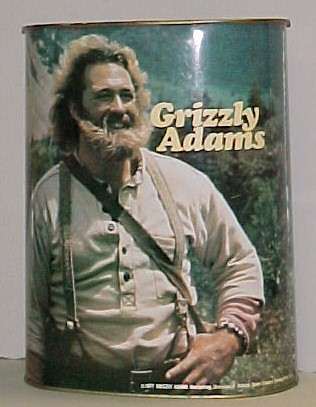
The crummy screen shot is of myself and some of my classmates lounging at our bar on Entropy Island (restricted access for now) in Second Life after holding a book chat that briefly descended into a John Updike pileup. When folks can't get down with the Rabbit-man, he's like an itch you just gotta scratch and tell everybody about. Anyway, I'm at the bar, far left and dressed all in black. I have a Grizzly-Adams like beard and a long, flowing lock of a mohawk as my do. I'll post a better picture soon. Once, looking just like this, I spent 15 minutes dancing to Sleazy D's I've Lost Control (still the ultimate acid track) in some lame virtual club I teleported to. I ended up feeling terribly lame for dancing my free, prefabricated dance moves amongst fellow avatar's who had either spent some serious downtime modifying their movements or wheeling and dealing with some dance programming maestro to jack their groove. It was fun for about 15 minutes because of the novelty of hearing Sleazy D, then I got bored. There's potential in that there Second Life, but I think it's at the Atari 2600 stage of development. Some folks are definitely doing some amazing things in Second Life with "user-generated content," for sure, but most of what's been created there passes as an amusing novelty or is simply banal. I'm interested in its potential and will continue to check in but I think I'm okay with letting others advance it.

Friday, April 27, 2007

I'd Try It

More from Suketu Mehta's Maximum City:

You can order a masala Coke. This is the same old Coca-Cola you know, the same fizzy brown liquid, but with lemon, rock salt, pepper, and cumin added to it. When the Coke is poured into the glass, which has a couple of teaspoons of masala waiting to attack the liquid from the bottom up, the American drink froths up in astonished anger. The waiter stands at your booth, waiting till the froth dies down, then puts in a little more of the Coke, then waits a moment more, then pours in the rest. And, lo! it has become a Hindu Coke.

I wonder, though- do the insecticides throw off the taste?

Wednesday, April 25, 2007

Leslie Burger's On the Phone, She's Got A Copy of the Roaches Sophomore Album She'd Like to Donate to Your Library!


Nobody should have to spend 12 hours reading about collection development policies or replying to any scenario where Leslie Burger of the ALA purrs into the phone and asks you to forecast how recent electronic resource initiatives will impact the development and management of library collections over the next five years. And yet, this is is how my day went down. I'd say I was committed to my fate roughly 75% of the time. That other 25% was given over to reading but not comprehending, zoning out, eating tapioca (which I adore) and blowing my nose because Abby and I have been given the gift of phlegm for 8 days and counting.

My independent study for this summer is a go. By early July I'll know all there is to know about public library audio-visual departments. Or not. I'm especially keen to unravel the mystery of why so many public libraries seem to have an inordinate amount of CD's from the likes of The Roaches or Spyro Gyra.

Monday, April 23, 2007

Sunday Lunch By the Lake

Cathy, Abby and I enjoyed our lunch by the lake yesterday afternoon, grateful to be out and taking advantage of the first 80 degree temperature readings since early October. We (or rather, Cathy) packed a little picnic, put it and Abby in her wagon and walked/rolled our way on over. After eating her share of cheese, grapes and bread Abby felt compelled to give me a hug. My back was soon covered in affectionate crumbs.

Sunday, April 22, 2007

Further Adventures in Very Bad Ideas

Have you heard about this?

American military commanders in Baghdad are trying a radical new strategy to quell the widening sectarian violence by building a 12-foot-high, three-mile-long wall separating a historic Sunni enclave from Shiite neighborhoods.

As Anthony Shadid's excellent Night Draws Near makes abundantly clear, for many Iraqis America's presence in their country evokes Israel's record in the Middle East, namely the incendiary issue of Palestine. Not surprising, Maliki ordered that the building of the wall to be stopped today. It reminded people, he said, of "other walls." As the Times article further articulates:

Mr. Maliki did not specify in his remarks what other walls he referred to. However, the separation barrier in the West Bank being erected by Israel, which Israel says is for protection but greatly angers Palestinians, is a particularly delicate issue among Arabs.

The American military isn't giving up hope yet. But honestly, the tactical stupidity, while following in the proud footsteps of over 4 years of tactical stupidity, is truly dumbfounding.

Sunday, April 15, 2007

Symbols of Corruption and Greed

Did you know that Tom "The Hammer" Delay, the former House majority leader and author of the memoir No Retreat, No Surrender: One American's Fight (not to be confused with the 1986 Jean-Claude Van Damme film of the same name) has a blog? Neither did I. Recent entries rake the hot coals of the conservative rights odd Rosie hatred and ask the burning question "Who is holding Barbara Walters accountable for Rosie’s offenses?," chastise the recent Supreme Court ruling that the EPA can indeed regulate greenhouse gas emissions and where Tom lets us know that "as a biologist I have always felt that the science behind ‘global warming’ and man-made climate change was absolute hokum," and pelts the United Nations for its tepid response to the recent Iran kidnapping of British soldiers. No real surprises under this hood.

According to a recent Economist article, Delay reminds some Republicans of "the days when the party controlled Congress and the romped over their Democratic colleagues. But most Republicans are keeping their distance, and his book is selling very slowly." Which is to say, Tom isn't exactly being welcomed back into the fold.

Saturday, April 14, 2007

Fried Dougy Goodness

The picture is from William Swislow's wonderful Interesting Ideas blog, an amazing clearinghouse of links galleries and additional resources committed to spreading the good word about "outsider, vernacular, self-taught and folk art, roadside art and architecture, weird cultural insights and warped politics."

Swislow writes:

Chicago's most vibrant art scene is not to be found in the galleries of River North or Wicker Park, but stretching along the city's longest street, Western Avenue. The work in this spontaneous gallery is unpretentious and, for the most part, unheralded. Its functional purpose does nothing to diminish its creativity or its range, from isolated drawings to full-blown art environments. And though these pages include images from all over Chicago, most of them are from Western Avenue itself -- the world's most artistic street.

Of course, what I like best about this picture is what it says (the warm, soft joy it expresses) about dough rather then its aesthetic merit, fond though I am of its lithe rendering of "Fried" followed by the bold, meaty "Dough." Sadly, Swislow informs us, the "emphasis on fried dough did not sustain this edition of the restaurant at 31st Street and the Dan Ryan Expressway."

(Thanks to Joe and his mighty Liminal for leading me to this doughy goodness.)

Friday, April 13, 2007

"Is This It?" Carmalla Asks

I'm going to miss The Sopranos something fierce when they close up shop in June. Cathy and I caught the first episode of its final run (Soprano Home Movies, the 78th episode...long may it live in syndication!) last night and among the myriad of things to love about it was its idyllic lake house setting in the Adirondacks. Its director, Tim Van Patten (he's directed 16 episodes of the Sopranos run) was particularly good at challenging the cozy cottage setting (there's even one of those vintage wooden Chris-Craft boats) with camera angles that were intensely ominous. The camera repeatedly cut from intimate close-ups of the characters (Tony and Bobby out fishing, and especially throughout the drunken, fisticuffs inducing Monopoly game scene) to angles that gave the appearance, intentionally, I thought, of the characters being unknowingly observed, perhaps being stalked or under surveillance. I was certain something awful and shattering was going to happen, the final narrative impetus set terribly into motion. I actually cowered behind a throw pillow because I thought Carmella was going to get shot by one of Phil Leotardo's guys. Or something equally outrageous. But it didn't happen, I realized, because David Chase would never capitulate to something so hackneyed.

The only thing I know, or so it's being said, is that it all ends in an ice cream parlor in New Jersey.

Thursday, April 12, 2007

The America I Loved Still Exists Between the Pages of a Kurt Vonnegut Book

While on the subject of burning books, I want to congratulate librarians, not famous for their physical strength, who, all over this country, have staunchly resisted anti-democratic bullies who have tried to remove certain books from their shelves, and destroyed records rather than have to reveal to thought police the names of persons who have checked out those titles.

So the America I loved still exists, if not in the White House, the Supreme Court, the Senate, the House of Representatives, or the media. The America I loved still exists at the front desks of our public libraries.

-Kurt Vonnegut, extracted from A Man Without a Country: A Memoir of Life in George W Bush's America

Monday, April 09, 2007

We Are Individually Multiple

The first 48 pages of Suketa Mehta's Maximum City have blown me away. I wish I had more time to read it though I'm happy to have grabbed a half-hour or so before bed the last couple nights. It's a dangerous book to crack when already pressed for extracurricular time.

Mehta was born in Calcutta before his family moved to Bombay for 9 years in the early 70's. From there they moved to Jackson Heights, New York where his father and brother transplanted their families for 8 years as they sought to carve out an even larger niche in the diamond business. Jackson Heights was, as Mehta writes, a "working-class enclave that was steadily being encroached upon by immigrants from darker countries" where he spent his formative teenage years living and pining, as any right-minded teenager should, for his native Bombay and the friends and culture he left behind. Ostracized by his white classmates as a "stinking heathen" who emitted "the foul odors of my native cooking," Mehta describes walking outside the schools "barged-wire-topped gates" on graduation day and kissing the ground in gratitude.

The book is also rich in stunning facts. Like many, I'm fascinated by urban spaces- their people, the energy they exude, their infrastructures both physical and political, the communities they support or deny. I'm especially curious about their population densities. For example, in the 2000 Census, Chicago had a population density of 12, 447 per square mile. Taken by itself, Edgewater, the Chicago neighborhood Cathy, Abby and I live in, had a 2000 density of 36,587. Of Bombay's population density, Mehta writes:

India is not an overpopulated country. Its population density is lower than that of many other countries not thought of as overpopulated. In 1999, Belgium had a population density of 130 people per square mile; the Netherlands, 150; India, under 120. It is the cities of India that are overpopulated. Singapore has a density of 2,535 people per square mile; Berlin, the most crowded European city, has 1,130 people per square mile. The island city of Bombay in 1990 had a density of 17,550 people per square mile. Some parts of central Bombay have a population density of 1 million people per square mile. This is the highest number of individuals massed together at any spot in the world.

1 million people per square mile is intense. How does that work exactly? Mehta has the gift of any great journalistic reporter fervently trying to take the pulse of a kaleidoscope. "All great cities are schizophrenic, " Mehta writes, quoting Victor Hugo. "Bombay has a multiple-personality disorder."

I'm looking forward to reading the rest of this one.

Tarpon Springs, Florida

Here's Abby smiling away at my parents breezy townhouse in Tarpon Springs, Florida last weekend. Note the bunny on the table just to her right, an object whose presence sent Abby into occasional paroxysms of delight. Known as neither "bunny" or "rabbit" but as the repeated exclamation "Hop! Hop! Hop!" it, along with a soft yellow duck basket, the moon viewed before bedtime and her grandparents held a special allure.

I should also note that Abby has a new song she's been singing this past week. It's the Applesauce Song. I made it up Wednesday afternoon and she was smitten. The girl loves her applesauce. Not surprisingly, improvisatory songs relating to apples are championed. Here are the lyrics:

Apple, apple, apple, applesauce
Apple, apple, apple, applesauce (repeat as needed)

It's more a chant then song, I suppose and Abby sings it as though it were an incantation, its reciting the surest way to conjure up Fuji slices for squeezing in the palms of each hand.

Monday, March 26, 2007

We Was Wrong

"It is hard to imagine any post-war dispensation that would leave Iraqis less free or more miserable than they were under Mr. Hussein," we said four years ago. Our imagination failed.
-The Economist, March 24th-30th 2007

First Haircut

Sunday, March 25, 2007

7 Songs

Heath tagged me with a blog meme that's been making the rounds. You're to list 7 songs you're currently enjoying, though I'm probably not alone in thinking it's more fun to follow the thread backward a ways, if only a few degrees of separation. Case in point-- beginning with Heath and working back I came across a 7-year old whose top 7 includes REM's cover of The Clique's Superman. I thought, "Excellent taste, little man, excellent taste!" before feeling peculiar and somewhat ill at ease to be reading a 7-year olds blog, a child who had himself been tagged by none other then his mother. So, you see, following such currents, hoping from hyperlink to hyperlink, blog to blog (ideally reaching its origin) allows for not only a healthy dose of serendipity but odd moments of slightly unseemly voyeurism.

Here are the next 7 songs to be played on the tower's shuffle play:

Little Heart: Harold Budd (Wandering ghost chords, occasional rumbles, chimes...I hope to spend a lot more of life wading in and out of this sort of thing)
Below: Philip Jeck (Jeck works with a modest sampler, mixer, a couple old turntables and 7-inch vinyl. On this cut he loops static, a wobbly sitar -I'm imagining the source vinyl was itself warped- and other unidentifiable sound detritus to create something as sonically cluttered as the present state of our Abby upended living room.
You've Got To Crawl to Me: Johnny Davis (Another one of these Numero Group crate-digger soul reissues, this one focusing on cuts from the Chicago based Bandit label)
Things That Scare Me: Neko Case (Shuffle, with its mysterious shuffle algorithms, sure loves itself some Neko Case. And that's just fine. Blacklisted, from which this songs comes, is drenched in a luxurious reverb, anchored by Case's amazing voice)
Don't Feel Right: The Roots (This song worked well at around the 18-minute mark on a recent treadmill workout...I was ever so slightly inclined, walking a healthy pace with my heartbeat fluxing between 155 to 160 bpm while my endorphin rush mingled, ever so nicely, with ?ueslove's tough strut)
Brond: Mikkel Metal (For which I can think of nothing to say)
Mashed Potatoes
: Nat Kendricks and the Swans (From the always welcome Atlantic Rhythm and Blues 1947-1974 collection, a mostly instrumental with a great breakdown into silence before a grinding sax comes roaring in to serenade a warm, buttery mass of mashed potatoes. Trust me, you'd want to shimmy all around the house in your sox to this one.

Sunday, March 18, 2007

Songs: Best of 2006


The Ruling Class: Loose Fur
Chinese Translation: M. Ward
Shade And Honey : Sparklehorse
Big Star Baby: Mojave 3
Young Folks: Peter Bjorn And John
Mothers, Sisters, Daughters & Wives: Voxtrot
One Time Too Many: Phoenix
Lloyd, I'm Ready To Be Heartbroken: Camera Obscura
Soldier Jane: Beck
The First Song: Band Of Horses
We Are The Sleepyheads: Belle & Sebastian
Outdoor Miner: Wire
Meteor Beach: Tom Verlaine
Trinidad: Willie Bobo
Lament 1 "Bird's Lament": Moondog
Blue Bayou: Roy Orbison
Everything About It Is A Love Song: Paul Simon
Spiders House: Califone
Grey Days : The Concretes
Bandits: Midlake
One Fine Summer Morning: Evie Sands
Mansfield and Cyclops: Espers
Comfort Of Strangers: Beth Orton
Song About Traveling: The Innocence Mission
Topanga Canyon: John Phillips
Something On Your Mind: Karen Dalton
Little Brother: Grizzly Bear
Isi: NEU!
Prepared [2]: Lambchop
That's The Way Love Goes: Willie Nelson
Jessica: Kaki King
Childhood: Beach House
Fallin' In Love: American Spring
So Glad To See You: Hot Chip
Andalucia: John Cale
Helpless: Buffy Sainte-Marie
London, London: Veloso, Caetano
Bokme: Momo Wandel Soumah
Let My People Go: Darondo
I'm Just Like You: 6ix
A Part Of Being With You: The Professionals
Willie : Cat Power
Kabassele In Memoriam: Franco And Rochereau
The Sleeping Lady and the Giant Who Watches Over Her: Duke Ellington
Bad News, Bad Times: Marion Williams
L-O-V-E (Love): Al Green
Lily Express: Gwigwi Mrwebi
I Am Controlled by Your Love: Helene Smith
Yolanda: Ambrose Campbell
Maindusa : Les Mangalepa
Feel The Need In Me: The Detroit Emeralds
Long Time Boy: Nadia Cattouse
Ti Tong Ti Tong: Les Vikings
Flop Eared Mule: Gid Tanner & His Skillet-Lickers
Black Rose: Waylon Jennings
Little Glass Of Wine: Paul Burch
Let Me In Your Life: Bill Withers
A Woman Like You: Bert Jansch
Compared To What: Roberta Flack
O Yes My Lord: Voices Of Conquest
Who Knows: Marion Black
Better Thee Than Me: Sly & The Family Stone
Wah Wah Man: Young-Holt Unlimited
Pernambuco : Bonfa, Luiz
Margaret vs. Pauline: Neko Case
The Eraser: Thom Yorke
So This Is Goodbye: Junior Boys
Twentieth Century : Pet Shop Boys
Wasting A Fall: Lawrence
Grey Skies To Blue: Köntrast
New day (Dub): Round Two Featuring Andy Caine
Landing: Matt John
Eleventh Hour: My My
Robag's Bobb Für F. : Robag Wruhme
Silent Shout: The Knife
Do Not Break: Ellen Allien
Batine Acid: AFX
Take me into your skin: Trentemøller
Over The Ice: FIELDS
Skamel: Kalabrese
Body Language / Interpretation : Booka Shade
Another Station: Lindstrøm
When She Said Goodbye: ScSI 9
Like You (Supermayer Remix): Gui Boratto
Harmonise: Herbert
Theme from Sprite: Squarepusher
For Dan: The Rice Twins
Sleazy Bee: Isolée
Dancingbox: Modeselektor
Fly Guy Rap: Fly Guys
Follow The Leader: Eric B. & Rakim
All For U : Aceyalone
Long Time: The Roots Feat. Peedi Peedi & Bunny Sigler
Underwater: Ghostface Killah
Type Inventory: Farben
A Moment To Myself: Alex Smoke
Kaluga: Mikkel Metal
Sowiesoso: Cluster
Gollum: Harmonia
Delius (Song Of Summer): Kate Bush
Naa Er Druene Paa Sitt Beste: Lindstrøm & Prins Thomas
ABERMORGEN: DORAU & KOEHNCKE
É Com Esse Que Eu Vou: Elis Regina
Come Rain Or Come Shine: Jimmy Giuffre 3
Re: Person I Knew: Bill Evans
Zarabanda: Anouar Brahem
A Falling Leaf : Assif Tsahar/Cooper Moore/Hamid Drake
Mamma: Gilberto Gil
I Feel Like Going Home: Yo La Tengo
Autumn Music 1: Max Richter
Flies: Brian Eno
Nocturne 4 : Boxhead Ensemble
The Glass House: Chicago Underground Duo
Please Gamelan Again: Colleen Et Les Boîtes À Musique
Portrait Of Light: Frequency
The Toy Garden: Helios
Eins: Gas
Sheets: Mountains
Chinook: Loscil
Verlust Der Motorik: Klimek
From a solid to a liquid: Biosphere
Next To The Field : Thomas Fehlmann
Chimeras: Tim Hecker
Love Will Tear Us Apart: Susanna And The Magical Orchestra
Gymnopédies No. 3: Reinbert de Leeuw
Solo Guitar With Tin Foil: Brian Eno & David Byrne
Imagine : Vijay Iyer
Jock O' Hazeldean: Dick Gaughan

Magnificent Creepiness

Tonight's technicolor musical accompaniment is being provided by Frank Sinatra's The Wee Small Hours of the Night. My first memories of Sinatra, of being vaguely aware of his iconic status and appeal, were formed in Fort Lauderdale, Florida sometime in the mid-70's. My Grandma lived there then, in a gated community where the speed limit was 10 mph and every few blocks there was a swimming pool with shuffle board courts. And Grandma dug Frank. It took me another 20 years- but that's when I first enjoyed the magnificent creepiness of the paranoid thriller The Manchurian Candidate and came to dig Frank for myself through his work on the big screen playing a troubled soldier who's slowly awakening to the fact that he's been brainwashed by Chinese and Russian agents. No crooning or nothing, not even so much as a Theme Song From The Manchurian Candidate. Just a couple hours of perfectly pitched anti-Communist hysteria with a knowing wink.

Friday, March 16, 2007

Film: Best of 2006


In no particular order.

-A Prairie Home Companion: Robert Altman, 2005
-L'Enfant: Jean-Pierre and Luc Dardenne, 2005
-Cache: Michael Haneke, 2005
-The Departed: Martin Scorsese, 2005
-The Death of Mr. Lazauescu: Cristu Puiu, 2005
-Three Times: Hou Hsiao-hsien, 2005 (especially for the second time)
-Time Indefinite: Ross McElwee, 1994
-The Long Goodbye: Robert Altman, 1973
-Fear and Loathing in Las Vegas: Terry Gilliam, 1998
-The Shop Around the Corner: Ernst Lubitsch, 1940

The above image is a still from Victor Erice's beautiful film, The Spirit of the Beehive (1973), one of my favorites and previously only available on an anemic VHS transfer drained of color but revelatory nonetheless. A new, stunning high-definition transfer was created for Criterion last year and played at the Music Box where I was lucky enough to catch it this past summer. One of those film experiences where I exited the theater stunned, just a little off balance and seriously punch drunk on celluloid. A perfectly haunted evocation of the intersect between childhood and imagination.

Sunday, March 11, 2007

Vaguely Laurie Andersonish.


As I write this, I'm exactly 30 minutes away from losing an hour. I'm half expecting a worm hole to open and Jean-Luc Picard to appear. I'd ask him about installing a holodek in our basement.

Sunday, March 04, 2007

Crocus Expectations

Spring Break has shed its grace upon us grateful Dominican students, and while I’d love to be telling you that early this morning Cathy, Abby and I piled into the Prius destined for sunnier, warmer climes, it's not without a small measure of regret that I'm now telling you it's simply not the case. For now. At the end of this month we'll be flying with Abby on our laps to Tampa, Florida and from there by car to my parents place in nearby Tarpon Springs, home to an abundance of Greek sponge divers and weighing in with an average yearly temperature of 74.8. I'm definitely wanting myself some 70's just about now!

When we get back it'll be April here in our great city. Crocus's will have already offered some purple exclamations of relief from the drab monotony of the urban winter landscape and, ideally, we'll have had a teaser day or two where warm, moist southerly winds stirred up months of grit and caused an unfortunate percentage among us to reveal their translucent white thighs hauntingly starved of sun. We don't mind, though. That's cool. We all understand the need to ditch the winter coats and expose a little skin to warmth that isn't bone dry forced heat.

It's this time of year that I miss Berkeley the most. Berkeley, home to "one of the world's most moderate climates" and where winter is the green season.

Saturday, March 03, 2007

Buoyantly Sneaky Pete

Oh, I'm never taking an on-line class again! Sigh. All this Blackboard posting nonsense (one post by this date, then two by this date in response to what your classmates said before, then start over again and don't pass go) keeps passing me unaware. I'm hard pressed to say why exactly. Like I have some unconscious blinders up-- take them off and I might startle and kick up some dust. I'm haunted by the little note on my syllabus regarding late postings and point deductions. As if it reveals something fundamental about my character. Nonsense, man, pure nonsense, but that's how I churn. I shouldn't care but I do. Way too much. Never used to. Third time is the charm though, I figure. I won't let another get by me. I'll know what's due and when from miles out. For now, we'll just have to sop up our petty sorrows and total possible point obsessiveness and move on. We'll curl up in Garcia's buoyantly Sneaky Pete Kleinow-like pedal steel guitar on Dire Wolf to linger and repose for a while. Really, I've just listened to it three times and I'm now totally ready to get into bed and read about Joy Division. Talk about a double bill!